

Residents Demand Comprehensive Probe as Concerns Grow Over Illegal Construction and Regulatory Oversight in South Delhi
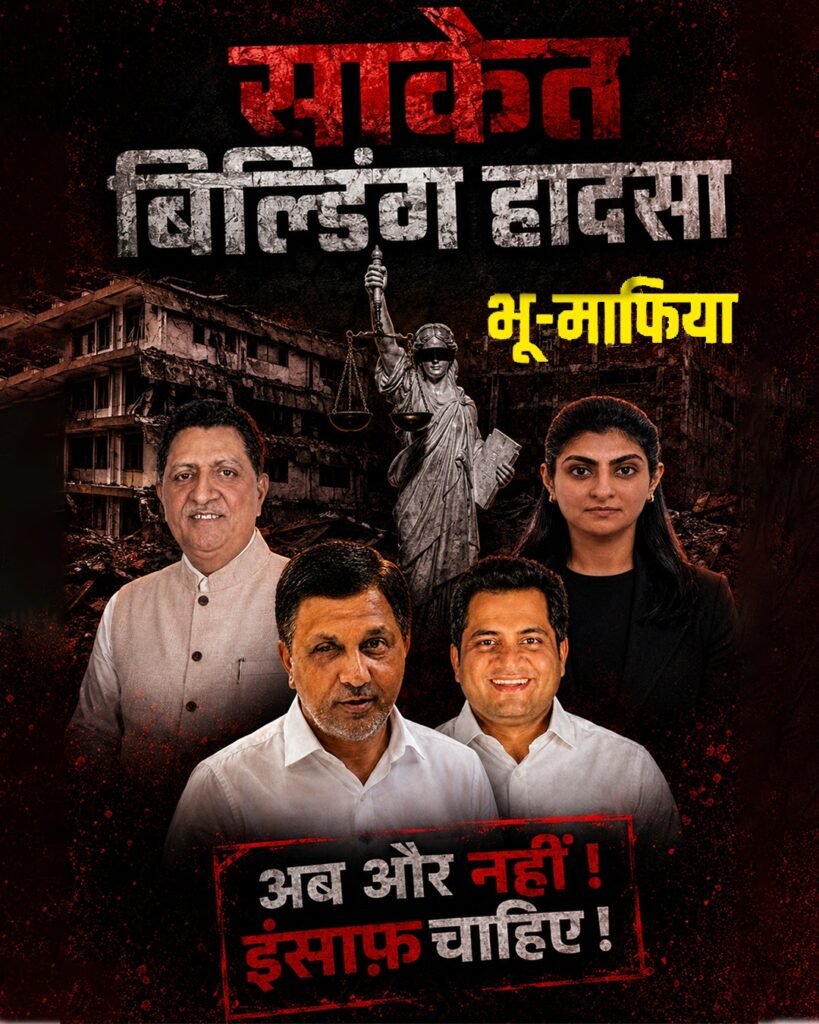
New Delhi: The collapse of a multi-storey building in Delhi’s Saket area has intensified public scrutiny of unauthorized construction practices, regulatory enforcement mechanisms, and accountability within the capital’s urban development framework. The incident has prompted residents and affected families to call for a thorough and transparent investigation into all individuals associated with the ownership, management, and development of the collapsed structure.
Authorities have already initiated legal proceedings in connection with the incident. However, local residents continue to raise questions regarding whether all persons linked to the property are being subjected to equal scrutiny during the ongoing investigation.
According to municipal records cited by residents, the collapsed property was originally registered in the name of late Mangal Singh and is currently understood to be managed by his three sons. Residents have questioned reports suggesting that legal action has so far focused on only one individual while seeking clarification regarding inquiries involving other persons allegedly connected to the property.
Unauthorized Construction Under Fresh Scrutiny
The tragedy has revived longstanding concerns about unauthorized construction in South Delhi, where rapid urbanization, fragmented property ownership, and alleged enforcement shortcomings have repeatedly become points of public concern.
Several local residents allege that the family associated with the collapsed building controls multiple undivided properties across the area and claim that a number of these structures may have been constructed in violation of applicable building regulations. These allegations have not been independently verified, and authorities have not issued any public statement confirming such claims.
The incident has also led to renewed discussions regarding the effectiveness of enforcement mechanisms intended to prevent unsafe and unauthorized construction activities.
Questions Raised Over Regulatory Enforcement
Some residents and local stakeholders have also raised concerns regarding possible influence over regulatory processes. Allegations have surfaced claiming that individuals connected to the property owners may have familial relationships with serving public officials.
However, no evidence has been publicly produced to support these allegations, and no government agency or investigating authority has made any findings substantiating such claims. Nevertheless, residents are urging authorities to ensure that all investigations remain transparent, impartial, and free from any perception of selective enforcement.
Focus Shifts to Other Linked Properties
The collapse has brought renewed attention to several additional properties reportedly linked to members of the same family.
Residents have pointed to structures situated on Khasra No. 264 and allege that portions of certain multi-storey buildings had previously been subjected to demolition action by the Municipal Corporation of Delhi (MCD) in 2025 and on earlier occasions for alleged violations of building bylaws.
Questions are now being raised about how repair work and further construction activities were allegedly undertaken after enforcement actions were carried out.
Residents have called upon civic authorities to clarify:
- Whether the properties subsequently complied with applicable regulations.
- Whether any restrictions imposed by the MCD were violated.
- What monitoring mechanisms were implemented following demolition or enforcement action.
- Whether any further violations were detected after previous inspections.
Properties Cited by Residents
Among the properties highlighted by residents for review are:
- D-73, Khasra No. 389/215 (Opposite D-83), Saidulajab
- B-31, Khasra No. 187, Paryavaran Complex
- B-32, Paryavaran Complex, Samadhi Plot, Saidulajab
- A property adjacent to B-40/2, Paryavaran Complex
Residents have urged authorities to examine whether these structures comply with sanctioned building plans, municipal approvals, and public safety requirements.
Several residents have additionally alleged that some of these properties were constructed by the same contractor and claim that construction activity continues at certain sites in the locality. These allegations remain unverified and subject to official investigation.
Experts Warn of Growing Safety Risks
Urban planning experts have consistently warned that unauthorized construction poses serious threats to public safety, particularly in densely populated urban neighborhoods.
Violations of sanctioned building plans can affect structural stability, fire safety compliance, emergency access routes, evacuation systems, and the overall resilience of civic infrastructure. Experts argue that consistent monitoring and timely enforcement are critical to preventing such incidents.
Victims Seek Accountability
For families impacted by the Saket collapse, the issue extends beyond questions of urban planning and regulatory compliance. Their primary concern remains accountability and justice.
“The victims and their families deserve answers,” said a resident involved in local civic initiatives. “Any investigation must be transparent, evidence-based, and free from any perception of selective action.”
Affected residents and community representatives continue to demand a comprehensive inquiry into the circumstances that led to the collapse, including any potential lapses in enforcement, construction practices, or regulatory oversight.
A Test Case for Delhi’s Urban Governance
As multiple agencies continue to investigate the incident, residents believe the Saket collapse could become a significant test of Delhi’s ability to address not only individual violations but also broader systemic issues that allow unauthorized construction to persist despite repeated complaints and enforcement actions.
The outcome of the investigation is expected to be closely watched by residents across Delhi, where concerns over illegal construction, building safety, and urban governance remain pressing public issues.
For many observers, the case represents more than a single building collapse—it is a broader examination of accountability, enforcement effectiveness, and the challenges facing one of India’s fastest-growing urban regions.